Tag: mental-health

  • Maybe healing begins here…

    There are moments in life when your heart doesn’t just ache — it shatters. It’s as if your chest becomes a room filled with broken glass, just waiting for one more shard to slice through muscle. And suddenly, everything is on the floor — sharp, painful, raw. You want to pick up the pieces, but every attempt cuts deeper. You try with trembling hands, tear-filled eyes, clenched teeth — but every effort only leaves more wounds. And yet, something in you still wants to fix it.

    Maybe healing doesn’t begin by gathering what’s shattered, but by finding the courage to leave it where it fell. Maybe this is the one thing you cannot control. In a perfect world, you could walk into healing easily — light, unburdened, free of the ache. But we don’t live in that perfect world.

    Reality asks us to face the pain — to feel it fully — because pain ignored doesn’t disappear. It lingers in how we love, how we speak, how we exist. It changes our posture in the world.

    But maybe healing isn’t about walking away untouched. Maybe it’s walking forward with scars — proof that you loved, that you tried, that something in you still believes in tomorrow — even when the you right now doesn’t. And in a world where you don’t know what to do with the pain — we have God.

    This is the moment you lay it at His feet — the moment you whisper the hardest prayer:
    “God, I can’t do this anymore. I can’t bear this pain.”
    In this moment, the pain feels like it’s tearing you apart. You’re questioning everything. You’re exhausted — prayed out, cried out. And that’s okay. Feel it. Let it out. Talk to God — He sees you, He hears you.

    One day at a time, the edges soften. The sharpness dulls and suddenly it doesn’t hurt as much anymore. The pain is no longer consuming you; it’s just a part of your story. And one day, you find yourself standing in the same room where your heart broke, realizing it’s not filled with shards, but light slipping through the wounds. You feel lighter.

    That’s grace — quiet, patient, redemptive grace. The kind that doesn’t erase the heartbreak but becomes a whisper of hope — that maybe, just maybe, you are going to be okay. You are not alone. You are loved, cared for, and you are sacred. Let Him lead you out:
    “The Lord is my Shepherd; I shall not want. He maketh me lie down in green pastures; He leadeth me beside the still waters. He restoreth my soul. Even when I walk through the valley of the shadow of death, I will fear no evil, for You are with me. Your rod and Your staff, they comfort me. You prepare a table before me in the presence of my enemies; You anoint my head with oil; surely goodness and love will follow me all the days of my life, and I will dwell in the house of the Lord forever and ever.”
    It’s okay to utter these words with barely any faith, because the little yearning you have — God sees it. He honors it. And He’s always loving you, even when you can barely feel the embrace.

    He’s whispering, “I’m here. I’ve always been here, and I will always be here. And maybe that’s what healing truly is — learning to rest in His presence, even when your heart still trembles.

    Picture of a heart relaying the healing message. Grace shining through the cracks
  • Reflective Bridge: What Teaching has taught me about myself

    Silhouette of a picture me sitting peacefully by a lake at sunset, bathed in soft natural light - symbolizing reflection, spiritual sensitivity and healing.

    Writing the last few posts has been like walking through the layers of who I am – a Teacher, Childcare worker, Dreamer and Women in transition. I have briefly shared about my personal journey, my passions, my lens on childhood and practical things I have learnt. But underneath all that, I have been falling, growing, and healing…

    Patience and self-regulation, the emotional safety and needs we are able to give children is indeed a gift. It reminds us of the Grace we forget to give it to ourselves sometimes. Children remind us that healing and growing is slow, loud and sometimes messy – and that is okay.

    I had amazing teachers growing up, there were so many underlying issues that couldn’t be addressed – because where I am from, a small neighborhood in South Africa, going to public school, we didn’t have luxuries of being attentive to the teacher-child ratios (Crowded classrooms). And even though growing up I wasn’t actually sure what I wanted to be when I grew up, but I vowed that I would give every single child I came across lots of love and attention, I vowed to listen – you would be surprised by how much kids have to say.

    That promise changed me.

    In learning to nurture children, I’ve learnt to turn inward – to be attentive to my own emotions, my own growth, my own healing. I’ve come to believe that kids feel our energies and feel the truths before we say them.

    One night, while my husband and I were babysitting my cute niece, she woke up so gently from her sleep, sat up, and smiled at something just over my husband’s shoulder. Her eyes followed it ever so softly – with no fear in her eyes, just peace. I remember saying a prayer while I was freaked out but took so much comfort by her calmness. Maybe she was smiling at an angel? Maybe children are so intuitive and they are able to see beyond what we can even begin to comprehend.

    There are a number of spiritual and metaphysical reasons that attempts to explain why children might be hypersensitive to energies. Children are said to being more intuitive, open and are able to perceive energies (even spirits) around them that grown-ups tune out. It is said to be a normal developmental phase of imagination-spiritual interpretation view. This is explained through overlapping lenses of purity, openness and developmental uniqueness. Whatever the reason, I believe we are called to protect that sensitivity. To create a safe, grounded space where the child/children can stay open, intuitive and whole. https://www.researchgate.net/publication/263519560_A_measure_of_spiritual_sensitivity_for_children?utm_source=chatgpt.com

    This next season of posts is less about answers, or my journey in Early Childhood development, it’s going to be more about searching soul searching – finding Nomagugu again, my faith, embracing grace and spreading hope. I am in a season of self-rediscovery, and I am aware that it comes with its own set of fallbacks, emotional challenges and its own spiritual stretching. I am looking forward to having you on this journey, and am especially excited to learning from YOU, what inspired you, and how you are self-discovering.

    Before pouring into anyone else, I’m learning to come back home to myself-and to the One who never left, even when I felt lost.

  • Finding Childcare from an Educator’s perspective: What to look for & What to Ask

    Logo for Nurture & Grow childcare facility featuring a butterfly made of colorful smaller butterflies

    As I continue growing in my purpose to nurture, support and guide little hearts – I watch as my journey unfolds gracefully with time. I am in no rush because I understand that even though I am one person with just 2 hands and a big heart, I for one, need to be graceful and aware of my growth. I work with little delicate tiny humans, and I understand that the work I do is very rooted in nurturing them.

    In this post I’m going to take a gentle dive into childcare environments when looking for a childcare center for your child.

    The word Nurture is used to describe environmental factors that influence the development of a child – Cultural background, Experiences, Educational opportunities and Parenting styles. Understanding these layers can help you choose a space where your child can feel safe, supported and free to grow.

    Recently, a thoughtful reader suggested a topic that challenged me to look from the outside in, it truly spoke to my heart: “Finding Childcare from an Educator’s perspective”. That insight reminded me how important it is to support busy parents – not only by helping them understand their Child’s development, but by standing beside them with support through these decisions. One of the most powerful ways we can do this is by building trust. It’s about creating an environment that is safe, grounded in care and designed to nurture the Whole Child – Body, Mind, heart and Spirit (Read about Nurturing Children through a Whole-Child Lense here).

    What to look for in a Quality Childcare Environment and Leading questions to ask

    Through my experiences, I’ve come to learn that quality child-care isn’t about perfection – its about intentionality, safety and connection. Whether you are searching for a daycare, preschool or in-home provider, here are the elements I believe every parent should look for – paired with questions to help guide your search.

    1. A nurturing Atmosphere

    Children thrive when they feel safe, seen and valued. We nurture children by providing comfort, guiding them through building relationships (Often modeled) and by how we deal with challenging behaviors.

    Ask:

    • How do you comfort a child who is upset or struggling to transition?
    • Can you describe how you build relationships with each child?
    • How do you handle challenging behaviors?

    2. Predictable Routine and Gentle Structure

    When children know what to expect, they feel safe. A steady rhythm helps children feel secure and confident in their environment. When they know what to expect. It also helps them understand boundaries, they develop respect, and it gives them a sense of embracing somebody else’s individuality.

    Ask:

    • What does a typical day look like here?
    • How do you support children during transition (e.g from playtime to lunch or nap time)?
    • Are there regualar times for outdor play, rest and quiet moments?

    3. Stimulating Environment

    A well-designed space reflects thoughtfulness and understands children’s developmental needs and supports brain development, engagement and exploration. It helps children make meaningful connections and process the world around them.

    Ask:

    • Can I take a look around the space?
    • What kinds of toys and materials do you use?
    • How do you ensure safety while children are using these materials?

    4. Respect for Developmental pace

    Every child is different, different personalities, interests and different timelines. It is important to accept the child as they are and to nurture that little spark until it becomes a shooting star.

    Ask:

    • How do you support different developmental levels?
    • Do you individualize activities based on interests/abilities?
    • How do you encourage emotional growth?

    5. Clear, Respectful communications with parents

    When Educators and parents intentionally sit and share each other’s goals, the child is able to pick up on consistency therefore will understand expectations (“If we are kind and respectful at school, we do the same at home and visa versa”). This sets the child up for success!

    Ask:

    • How often do you communicate with parents about their children’s development and activities?
    • Are the opportunities to check in regularly or ask questions?
    • How do you handle concerns/differences expressed by the parents or feedback about care?

    Before closing, I want to share something meaningful from a conversation I had with my husband, Milton. I asked him what he would look for if we were searching for a daycare for future child/children. He said the first thing he’d look at is reviews, followed by the layout and pictures of the center—especially noticing how diverse the children and staff appear in any photos available. When visiting a center in person, he’d pay close attention to cleanliness, the age and demeanor of the teachers (he believes age often reflects maturity, which I found to be a really interesting point), the play areas, and the types of toys offered. His approach is very observational—he would let the environment guide the questions. What stood out to me from that conversation is how many ways there are to evaluate a potential childcare environment—and how both parents can bring unique perspectives to the decision-making process.

    Supporting the Transition

    It’s also important to remember that every school or center will have its own way of supporting children through the transition process. Educators understand that starting school is a big shift for a young child, so many programs offer gradual entry options, like beginning with a two-hour visit and slowly increasing the time over several days. When parents can be flexible with this approach, it often makes the transition smoother and more successful for everyone.

    Final thoughts: Trust the journey!

    As much as this shift is a big one for your child, it’s a big one for you, too. Not so long ago, your little one was tiny and scrunchie in your arms—and now they’re beginning to show their own little personality, their own spark. Choosing child care means learning to trust others, yes—but it also means learning to trust yourself.

    Trust your instincts. You know your child. You know what feels right. You don’t have to be an expert to sense when something aligns with your values or when a space feels truly safe and nurturing.

    And trust your child, too. They may be shy at first—and that’s okay. But look closely for the signs: a spark of curiosity, a quiet glance at a toy, the way they lean in when a teacher speaks gently to them. These little moments matter. They tell you when a space is becoming a safe place for your child to explore, grow, and belong.

    Thank you to every single person that takes the time out of your day to read, like, share or comment on my blog. You may not realize it but your presence here is part of what keeps me going. This part of the internet has become a soft place for me to land, to process and to reflect. If you are ever have something you are wondering about or would like me to write on, please don’t hesitate to ask. I might not always have the perfect words, but I promise I’ll meet your topic with heart and care. This blog is as much yours as is mine.

    To the dearest reader who suggested this topic – Thank you! You reminded me why I started writing in the first place. This entry wouldn’t have come together without you – I am truly grateful. I do hope it gave you the insight you were looking for.

    Until next time!

    Gracefully

    Nomagugu Luna

  • From Head to Heart: Nurturing Children through a Whole-Child Lense

    Dearest Gentle Reader…

    As I find myself re-watching The Bridgeton’s show. this author finds herself compelled to share the most exciting concept that not only shapes the concept of Early Childhood Development for her but continues to mold the woman and practitioner she is becoming. The Whole Child Approach – rich in intention, rooted in love, grace and understanding for Nurturing the “Whole Child”.

    Brief background for this approach

    The Whole Child Approach, though modern in name, is deeply rooted in the work of pioneers who saw education as sacred; John Dewey believed learning should be meaningful and connected to real life. Maria Montessori taught us to trust the child – to follow curiosity and nurture their independence. Rudolph Steiner, through Waldorf education, reminded us that art, imagination, rhythm are not extras but are essential for growing a full rich inner life. Jean Piaget helped us understand that children learn in stages, through exploration and play – that they are thinkers and builders of their own understanding. All these visionaries express that a child is more than a mind, A child is a soul in bloom.

    So What is the Whole Child Approach – At Home?

    At its core, it puts into perspective the many layers that make up a child. It guides our intention in nurturing and raising children, not just for success, but for Wholeness. This approach shows up in the way we listen, validate, nurture and provide for the child outside of human basic needs such as a shelter or food and even clothes, it shows up in their little cute eyes – windows to their souls. Lets begin the emotional layer – the one closest to my heart and most foundation to everything else.

    Emotional Development: Big feelings in the tiny body. In my own journey, I’ve come to recognize the sacred weight of holding space for a child’s emotions. Not rushing to fix. Not brushing off their tears but sitting with in the storm or reassuring them with your presence and gently giving them the space to find their own way through.Sometimes it sounds like, “I’m here for you. I love you. It makes me sad to see you sad, but I believe in you. And when you’re ready, I’ll be right here waiting for you.”

    Whether it’s a meltdown, a moment of frustration, or a boundary being tested, our job is to anchor them without overpowering them. For example:

    • “I understand you want a snack, but right now Mommy is saying no because dinner is soon. I can bring out some of your favorite toys and set a timer. When it rings, we’ll eat—and after dinner, you can have your snack.”

    • Or: “Throwing things can be exciting, especially when you see them fly across the room. But blocks aren’t for throwing. I can give you a ball instead, and we’ll go outside to kick or toss it together.”

    This is emotional coaching in action—validating their feelings while setting loving, clear boundaries. It shows them they are safe, they are seen, and they are capable of making better choices, all while knowing you’re with them every step of the way.

    Physical Development: Movement, co-ordination and rest. Physical Development is more than milestones – it’s about honoring and supporting their body needs to move, run, wiggle and rest. There’re so many ways to look at this development but supporting their physical growth can look simple, but it needs to be intentional, to help stimulate their brain-body functions. In this approach there are main subheadings to consider;

    1. Their fine motor skills which involve the small muscles in the hands and fingers, essential for tasks like grasping, buttoning, drawing or painting on small surfaces. 2. Gross motor skills which include bigger muscles needed for running, kicking, throwing or even walking. 3. Co-ordination is the main concept in Physical development. Co-ordination is the ability to move their body parts in a functional and harmonious manner – the ability to use their limbs and eyes in order to perform a task.

    At home, supporting physical development can include;

    • Setting up safe spaces where the child can move freely – climb, run or even crawl. We can often find equipment that support their physical exploration in parks, even right outside. We can support them by letting them pick them pick their equipment that interests them, and trust their instincts, let them explore – try and only help if they look back with those cute puppy “help me eyes”
    • Offering nourishing foods that support their growing immune systems, foods/snacks that are rich in – Vitamin D, iron and zinc are the 3 most important nutrients they need to grow – amongst others.
    • Recognizing when overstimulated and the child is calling for rest – you can redirect them to a calm activity it doesn’t have to be sleepy time, and kids learn from us. Children often learn from us, modelling calm behaviors such as reading, yoga or even short meditation sessions can be helpful, sometimes they just need cuddles – its about restoring balance.

    Cognitive development is all about how a child thinks, learns, remembers, and solves problems. It’s the invisible yet powerful work happening behind their questions, their imaginative stories, their problem-solving, and even their moments of silence and observation.

    From the moment they’re born, their brains are making connections—neurons firing, building pathways, and storing memories. These early years are a critical window for brain development, and we can support that growth by simply creating a home filled with rich stimulation, curiosity, and meaningful interaction.

    At home, cognitive development can be supported by:

    • Open-ended play—blocks, pretend play, storytelling, and art invite them to explore without pressure.

    • Everyday learning moments—counting fruit during snack time, sorting laundry by color, asking questions during walks (“What’s that?), and you having to repeat what “that is” for the 1000s time.

    • Allowing space for curiosity—instead of always giving answers, respond with “What do you think?” or “Let’s figure it out together.”

    • Reading aloud—books not only boost vocabulary and comprehension, but they build imagination and memory too.

    I’ve learned that children don’t always need more information. What they really need is permission to wonder. To explore their own ideas without judgment. To be met with patience, not performance. Because when they feel safe to think freely, their minds begin to bloom.

    Spiritual Development: Wonder, Faith & the Quiet Things That Matter. Spiritual development is often the most tender and overlooked part of a child’s growth—but it’s also one of the most powerful. It’s not just about the Holy Spirit; it’s about helping a child connect to something greater than themselves. To feel loved, safe, purposeful, and aware of beauty in the world around them.

    For me, this begins with faith. I believe that every child is a divine creation—fearfully and wonderfully made (Psalm 139:14). Nurturing their spirit means creating space for awe, for questions, for stillness, and for joy.

    At home, spiritual development can look like:

    • Morning prayers or blessings—short, whispered moments of gratitude to start the day with peace.

    • Nature walks—pausing to wonder at the shape of a leaf, the color of the sky, or the song of a bird.

    • Nighttime prayers or blessings – short prayers, whispers for gratitude to end the day, small everyday blessings we might take for granted and a little song for peace for the night.

    As I continue learning and growing—through both study and hands-on experience—I’ve been deeply moved by how many of you resonate with the heart of this journey. Your comments, reflections, and quiet encouragement remind me that we are not alone in this calling to raise whole, rooted, radiant children.

    One beautiful suggestion from a reader truly stuck with me: to explore “Finding Child Care from an Educator’s Perspective.” It reminded me how vital it is to support parents—not just in understanding development, but in making confident, grace-filled choices for their child’s care and learning environment.

    So stay tuned. Next week, I’ll be diving into a guide for choosing a caretaker or school—through the lens of the Whole Child. Because every decision you make for your little one matters deeply. And you deserve to feel seen, supported, and strong in that process.

    With love and grace,

    Nomagugu Luna

  • Still becoming: The heart of Teacher Gugu

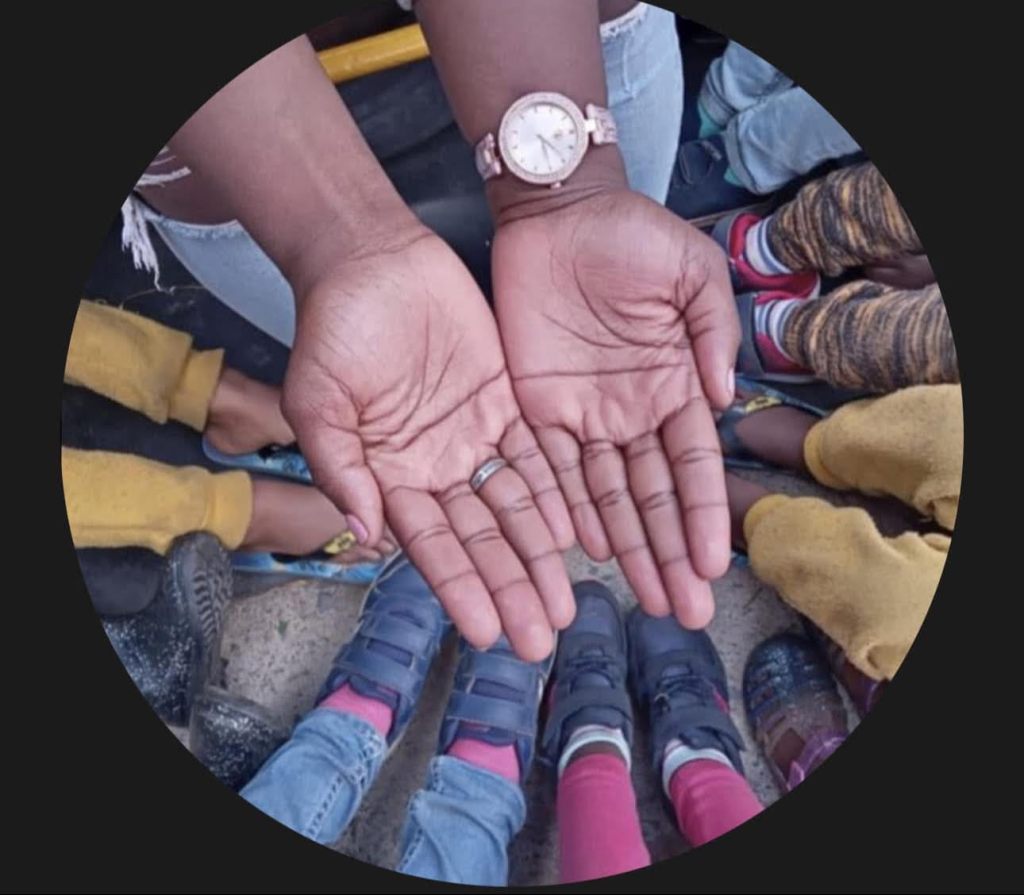
    There’s something that lights up my heart every time I see this picture. It captures more than just a moment—it represents presence, surrender, and purpose. Out of over 8 billion people in the world, I was deemed “worthy” to love, care for, and pour into these little souls. Not just to keep them safe, but to nurture them, to teach them, and to lead them the best way I know how.

    It still amazes me—here I am talking about passing down wisdom and leading 2- to 3-year-olds, but that’s how important this calling is to me. Those are my hands in the photo, open wide. And those little shoes? They belong to my tiny humans. Their steps represent their own journeys, while my hands symbolize surrender and service. I consider it a deep honor to have played even a small role in laying the foundations of their lives. This—this—is where my heart races. This is where I believe I’ve found my purpose.

    Early Childhood education isn’t just about teaching ABC’s and Colors – it really is about laying a foundation, planting a seed and nurturing that seed till it grows into this beautiful plant, it then finds its own footing and unlike plants – they take off, they go out there and make their own statements in the world. Once that seed has sprouted, grown roots, a stem and eventually flowers – You have played your part, it may not end there but lay in peace knowing that you are powerful! Because you basically had an idea on how to raise this tiny human and you did your best. Our “Bests” may not look the same, but they all come from a place of love.

    Going on a “Teacher Gugu” rant; Whenever I meet a child, my first priority is to observe, listen and watch for cues because I want to get to know the child, understand their needs and meet them in their developmental level. I build a relationship by creating a safe environment, bonding with the child by letting them lead me in play (Children’s favorite language). I use a concept known as the “Whole Child” approach, which is basically a holistic method where you take into account the 4 factors that make up a child – Emotional, Social, Physical, Cognitive.

    I remember when I was still teaching in South Africa, I used to be the one to welcome the children into the school with a big smile and open arms while calling out their names, chatted with the parents and deliver messages to teachers. I will never forget each and every hug I got – It was like a constant reassurance. I would then end my morning routine at the door and when I walk to my Giraffe class (2-3year olds), I would be greeted with big smiles, joyful screams of “Tita Gugu” and even more hugs! We would start our morning routine with their favorite songs, then everybody to the potty, morning circle time which was prayers, weather charts, numbers and theme work for the week. Slowly go about our day with art and slowly rolling over to structured free play.

    With the little time I spent in the classroom there’s quite an ache in my heart – a longing to become a “mama”. I carry everything I’ve learned not just for the children I’ve taught or nannied or my little sweet nieces but for those I pray will call me Mom one day.

    What I’ve come to know is you don’t need a formal classroom to shape a child’s life. The home is actually the most powerful classroom – its where you lay your foundation, where you plant your seed. The morning routines and morning snuggles of that cute groggy tiny human ever so curious and hungry, the kitchen tables, moments of play, meltdowns and bedtime routines – these are the real lessons.

    Whether you are a Mom, Dad, a Teacher, Nurturer, or Grandma, Grandpa, Nanny, Uncle or Aunt or even still dreaming. When caring for a tiny human consider “The whole Child Approach”, in this case it would be the “The child at home Approach”

    1. Emotional: Big feelings in the tiny body
    2. Social: Kindness and Connection
    3. Physical: Movement Co-ordination
    4. Cognitive: Curiosity and Stimulation
    5. Spiritual (Bonus): Roots

    As I continue walking this jorney – teacher, nurturer and one day mother, I carry these truths with me. It doesn’t take perfection to raise a child, only presence, patience, and a heart willing to grow with them for them. You can use this as a way to prepare the soil for your seed, or Teacher Gugu pouring her itty-bitty drops of water into your cup. “Start children off on the way they should go, and even when they are old they will not turn from it” Proverbs 22: (NIV).

    Thank you for taking the time to read this post. In my next post I will be going into a little more detail on the “Whole Child Approach Method“. I would love your interaction on this post, comment and like, let me know what topics you would like me to dive into next.

    With Gratitude and Hugs

    Gugu

    #StillBecoming